
Course Overview
Cybersecurity is one of the fastest-growing and most critical fields in today's digital economy. As organizations increasingly rely on technology, cloud services, online communication, and digital infrastructure, protecting information and systems from cyber threats has become a global priority. Cyberattacks can result in financial losses, operational disruption, reputational damage, and data breaches, making cybersecurity knowledge essential for every professional and organization.
The Cybersecurity Fundamentals programme provides learners with a comprehensive introduction to the principles, practices, and technologies used to protect digital systems, networks, applications, and information assets. Participants will develop a strong understanding of the cybersecurity landscape, common cyber threats, security controls, risk management practices, and strategies for maintaining secure digital environments.
This programme explores how cybercriminals exploit vulnerabilities through malware, ransomware, phishing, social engineering, identity theft, insider threats, and network attacks. Learners will understand the methods used to identify, prevent, detect, and respond to cybersecurity incidents while developing awareness of modern security challenges affecting businesses, governments, educational institutions, and individuals.
Designed for students, professionals, educators, managers, entrepreneurs, and technology enthusiasts, this programme combines foundational cybersecurity knowledge with practical applications and real-world case studies. Participants will learn how to implement security best practices, protect sensitive information, strengthen digital resilience, and contribute to a culture of cybersecurity awareness.
The programme also introduces learners to emerging cybersecurity trends, cloud security, data protection regulations, security governance, and the growing role of cybersecurity professionals in safeguarding digital transformation initiatives.
By the end of the programme, learners will possess the foundational cybersecurity competencies needed to recognize threats, reduce vulnerabilities, support secure technology usage, and contribute effectively to organizational security objectives.
Programme Objectives
This programme aims to:
Develop foundational cybersecurity knowledge.
Build awareness of modern cyber threats and attack methods.
Strengthen digital safety and information protection practices.
Introduce security frameworks and risk management concepts.
Promote responsible and secure technology usage.
Prepare learners for cybersecurity-focused roles and further study.
Key Learning Areas
Module 1: Introduction to Cybersecurity
Understanding Cybersecurity
Importance of Digital Security
Cybersecurity Domains
Current Cyber Threat Landscape
Module 2: Cyber Threats & Attack Vectors
Malware and Viruses
Ransomware Attacks
Phishing and Spear Phishing
Social Engineering Techniques
Insider Threats
Identity Theft
Module 3: Information Security Fundamentals
Confidentiality, Integrity & Availability (CIA Triad)
Information Protection Principles
Data Classification
Security Policies and Procedures
Module 4: Network Security Basics
Networks and Connectivity
Firewalls and Security Controls
Secure Communication
Network Monitoring Concepts
Module 5: Authentication & Access Control
Password Security
Multi-Factor Authentication (MFA)
User Access Management
Identity and Access Control
Module 6: Data Privacy & Protection
Personal Data Protection
Data Security Best Practices
Privacy Regulations Awareness
Data Breach Prevention
Module 7: Risk Management & Incident Response
Cyber Risk Identification
Risk Assessment Fundamentals
Incident Detection
Security Incident Response Basics
Module 8: Cloud & Emerging Security Challenges
Cloud Security Fundamentals
Mobile Security
IoT Security Awareness
Future Cybersecurity Trends
Module 9: Cybersecurity Awareness & Best Practices
Safe Internet Usage
Secure Remote Working
Digital Hygiene
Building Cybersecurity Culture
Module 10: Real-World Cybersecurity Applications
Industry Case Studies
Security Challenges Across Sectors
Cybersecurity in Business
Career Opportunities in Cybersecurity
Learning Outcomes
Upon successful completion of this programme, learners will be able to:
Understand key cybersecurity principles and terminology.
Identify common cyber threats and attack techniques.
Apply information security best practices.
Protect sensitive information and digital assets.
Recognize phishing, malware, and social engineering attacks.
Understand network and access security fundamentals.
Support cybersecurity awareness initiatives.
Apply risk management concepts in digital environments.
Promote secure online behavior and responsible technology usage.
Contribute to safer and more resilient organizations.
Programme Benefits
For Students
Gain future-ready cybersecurity knowledge.
Improve digital literacy and cyber awareness.
Enhance employability in technology-driven industries.
Build a strong foundation for advanced cybersecurity studies.
For Professionals
Improve workplace security awareness.
Reduce cyber risks and vulnerabilities.
Strengthen data protection practices.
Support organizational cybersecurity initiatives.
For Organizations
Develop security-conscious employees.
Reduce exposure to cyber threats.
Strengthen digital resilience.
Improve compliance and risk management practices.
Practical Learning Components
Cybersecurity Awareness Exercises
Threat Recognition Simulations
Security Risk Assessment Activities
Case Study Analysis
Security Best Practice Implementation
Interactive Knowledge Assessments
Career Pathways
This programme supports career development in areas such as:
Cybersecurity Analyst
Information Security Associate
Security Operations Associate
IT Support Specialist
Network Security Associate
Cyber Risk Analyst
Security Compliance Officer
Digital Safety Coordinator
Information Protection Specialist
Security Awareness Trainer
Who Should Enroll?
University and College Students
Working Professionals
Faculty Members and Educators
Business Owners and Entrepreneurs
Administrative Staff
IT Personnel
Government Employees
Anyone interested in cybersecurity and digital protection
Assessment Components
Module Quizzes
Cybersecurity Awareness Assessments
Practical Exercises
Case Study Analysis
Scenario-Based Activities
Final Assessment
Certification
Participants who successfully complete all programme requirements and assessments will receive a:
Certificate in Cybersecurity Fundamentals
Issued by UpSkill Global Education Technologies Inc., Ontario, Canada
Digital verification and certification records may be provided through the UpSkill Global Learning Management System (LMS).
Skills Gained
✓ Cybersecurity Awareness
✓ Information Security
✓ Threat Identification
✓ Data Protection
✓ Risk Management
✓ Security Best Practices
✓ Digital Privacy
✓ Network Security Fundamentals
✓ Incident Response Awareness
✓ Cyber Resilience
✓ Secure Technology Usage
✓ Security Governance Awareness
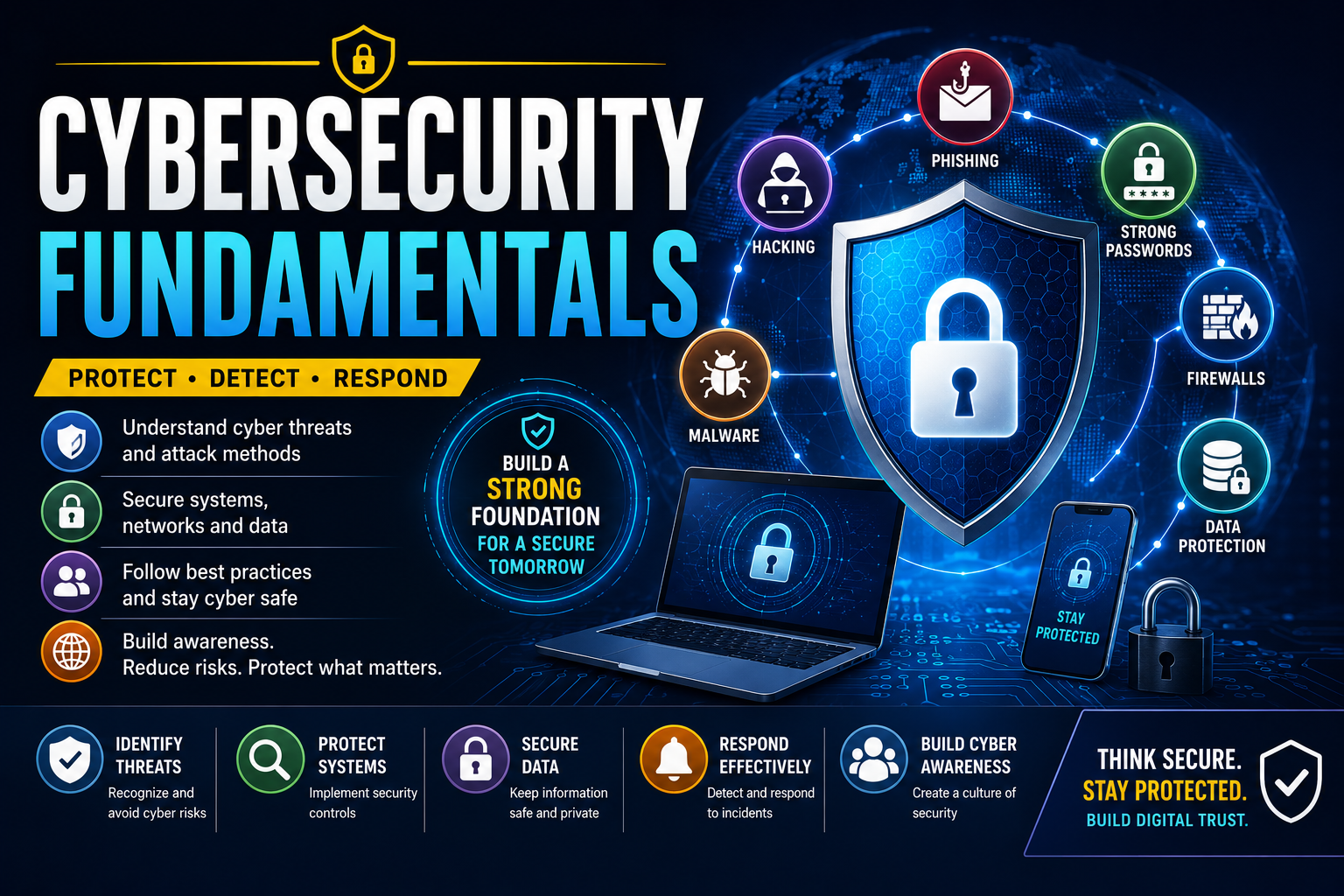
Cybersecurity Fundamentals
Category: Cybersecurity and Digital Safety
Duration: 30 Hours
Level: Beginner
Exam: Yes